
Stay in the loop
Subscribe to receive the latest email news and updates from Shippit
Rising fuel prices, tighter delivery windows, and growing customer expectations are putting enormous pressure on delivery operations. Businesses are expected to move more orders - from plasterboard to pathology samples, fresh fish to furniture - faster, more reliably and with greater transparency than ever. Yet many fleet operators still rely on spreadsheets, emails, or driver intel, rather than route optimisation software to plan daily routes.
What appears to be a workable system on the surface hides major inefficiencies; resulting in wasted fuel, missed delivery windows (creating costly re-deliveries), and reactive decision-making. That’s not to say the potential for lost contracts.
Route optimisation software changes the equation. By automating planning, dispatching faster, and delivering more, it helps fleet managers reduce costs, increase delivery capacity, and improve customer satisfaction.
What is the difference between manual route planning and route optimisation software?
Route optimisation software automates one of the most complex tasks in logistics: figuring out who delivers what, in what order, by when. It replaces spreadsheets and driver intuition with algorithms that process hundreds of variables at once (like traffic, time windows, vehicle load, driver availability) and generate the most efficient routes in seconds.
The difference from manual planning isn't just speed. It's the ability to consistently account for constraints that human planners simply can't hold in their heads at scale. To understand its impact, it’s helpful to compare manual planning with route optimisation software directly.
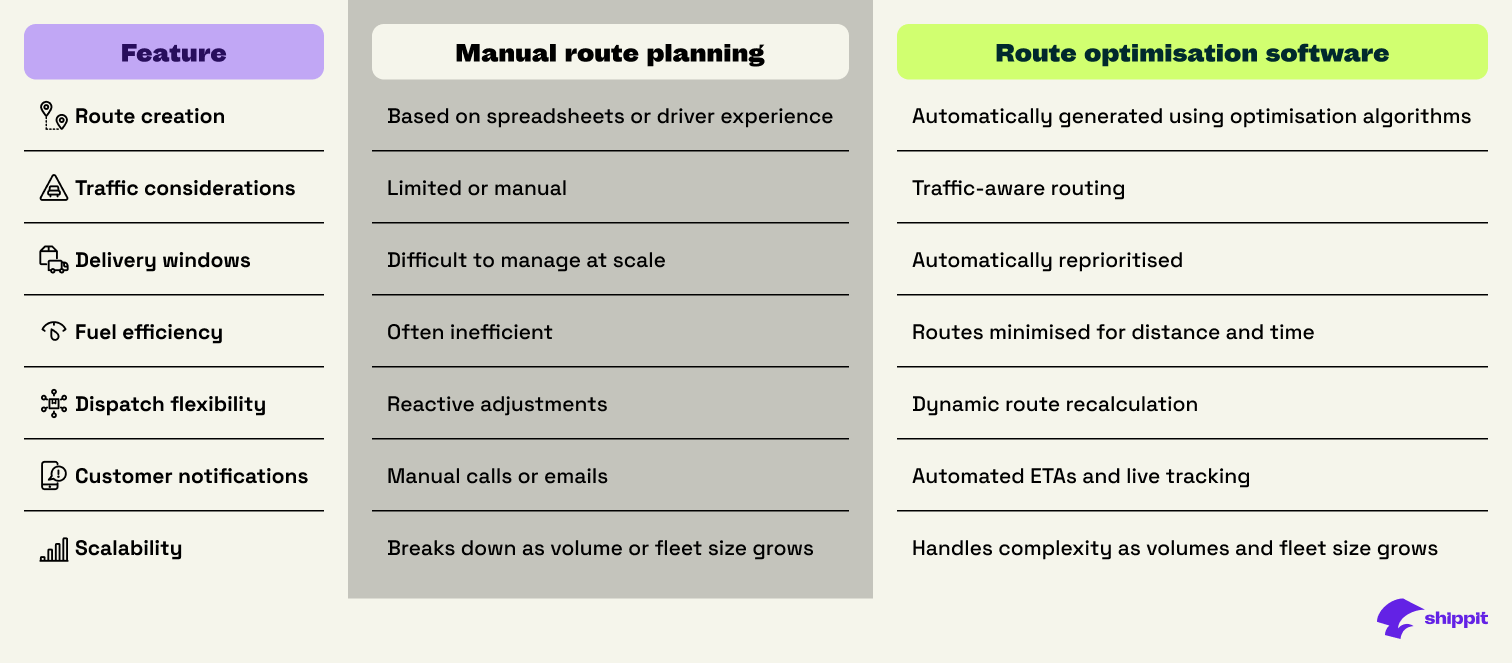
As delivery volumes grow, the limitations of manual planning become increasingly clear. What works for a small operation quickly breaks down when fleets expand or delivery complexity increases.
Here’s where manual planning quietly drives up costs.
Missed delivery windows create hidden costs
Meeting delivery windows is one of the most important aspects of last-mile logistics. For customers ‘three to five business days’ is no longer good enough; they need delivery windows, and they must be able to trust them. Failing to meet those expectations can quickly damage brand reputation.
Manual route planning makes it difficult to consistently meet delivery windows because it’s too reliant on human judgement. Dispatchers typically plan routes based on past experience, basic mapping tools, or spreadsheets that list stops in a rough sequence.
Human judgement struggles to account for the many variables that affect delivery schedules, including:
- Traffic conditions
- Stop density
- Delivery time windows
- Driver hours
- Vehicle capacity
When these variables aren’t accurately factored into route planning, the result is often missed deliveries. For even a standard parcel, a re-delivery can entirely erode margins. But if it’s heavy construction materials that require a crane to unload them, the re-delivery could be costly enough to see a business make a loss on the entire order.
But the cost doesn’t stop at a failed delivery attempt. Missed or unreliable delivery windows are one of the biggest drivers of “Where Is My Order?” (WISMO) enquiries, which can account for up to 70% of all customer support requests for delivery-led businesses.
Every WISMO enquiry requires time from customer service teams, often triggering multiple touchpoints between dispatchers, drivers, and customers. When delivery visibility is poor, these enquiries quickly become a significant operational drain on both time and resources.
Route optimisation software reduces this risk proactively. By analysing delivery constraints such as traffic, delivery windows, driver hours, and vehicle capacity, it automatically assigns the most appropriate vehicle to each order and generates the most efficient route for that vehicle to take.
For businesses managing thousands of deliveries every day, this significantly improves delivery reliability, reduces re-deliveries, and lowers the volume of WISMO enquiries.
Fuel inefficiency quickly adds up
Fuel is one of the largest operating expenses for any delivery fleet. Even small inefficiencies in route planning can dramatically increase fuel consumption over time.
Manual route planning often produces inefficient routes because it lacks the analytical power to calculate the optimal delivery sequence. Drivers may double back between stops, take longer routes between delivery points, or spend unnecessary time idling in traffic.
These inefficiencies may seem minor on a single route, but across an entire fleet they add up quickly. If each vehicle drives just a few extra kilometres per day, the total additional distance over a year can be substantial in a fleet of, for example, 100 vehicles.
Route optimisation software helps minimise these inefficiencies by calculating the most efficient routes based on distance, travel time, and road conditions. Advanced systems also factor in traffic patterns and delivery priorities, allowing drivers to avoid congestion and maintain consistent delivery schedules.
The result is fewer kilometres driven, less fuel consumed, and lower overall operating costs.
For many fleets, implementing route optimisation software leads to measurable reductions in fuel usage, and it often takes just days to see the impact.
Inefficient routes push deliveries into the next shift
Another hidden cost of manual route planning is unfinished routes. When routes are planned using rough estimates rather than accurate travel data, dispatchers often overestimate how many deliveries a driver can realistically complete in a shift. A route might be planned with 15 drops, but the driver may only have time to complete 12.
Due to strict driver fatigue laws - like the Heavy Vehicle National Law (HVNL) which limit drivers to 12 hours of work within a 24-hour period - those final deliveries can’t simply be squeezed in at the end of the day. Once a driver reaches their legal limit, the remaining drops must be pushed to the following shift.
This creates a knock-on effect. Those delayed deliveries now have to be absorbed into the next day’s routes, often forcing dispatchers to reshuffle schedules and creating a rolling backlog of work.
Some operators attempt to avoid the disruption by squeezing those final deliveries in any way - but doing so risks breaching fatigue management regulations, which can carry significant financial penalties.
Route optimisation software prevents this problem by planning routes around:
- Realistic travel times
- Delivery durations
- Driver working hours
Platforms like NowGo by Shippit automatically generate routes that can be completed within legal shift limits, while allowing dispatchers to reprioritise deliveries throughout the day if conditions change.
By ensuring routes are both efficient and compliant, businesses can complete more deliveries within each shift without creating next-day backlogs or regulatory risk.
Reactive dispatching slows down operations
Delivery operations rarely go exactly as planned. Traffic incidents, last-minute order changes, or customer requests can quickly disrupt a carefully prepared route. When routes are planned manually, responding to these disruptions becomes time-consuming and chaotic at best, and impossible at worst.
The reactive approach - which forces dispatchers to call drivers individually to reassign deliveries, update routes, or adjust schedules - not only slows down operations but also increases the risk of mistakes.
Route optimisation software introduces a far more flexible approach to dispatching. Platforms like NowGo by Shippit allow dispatchers to adjust routes dynamically throughout the day, automatically recalculating the most efficient path for each driver when new information becomes available.
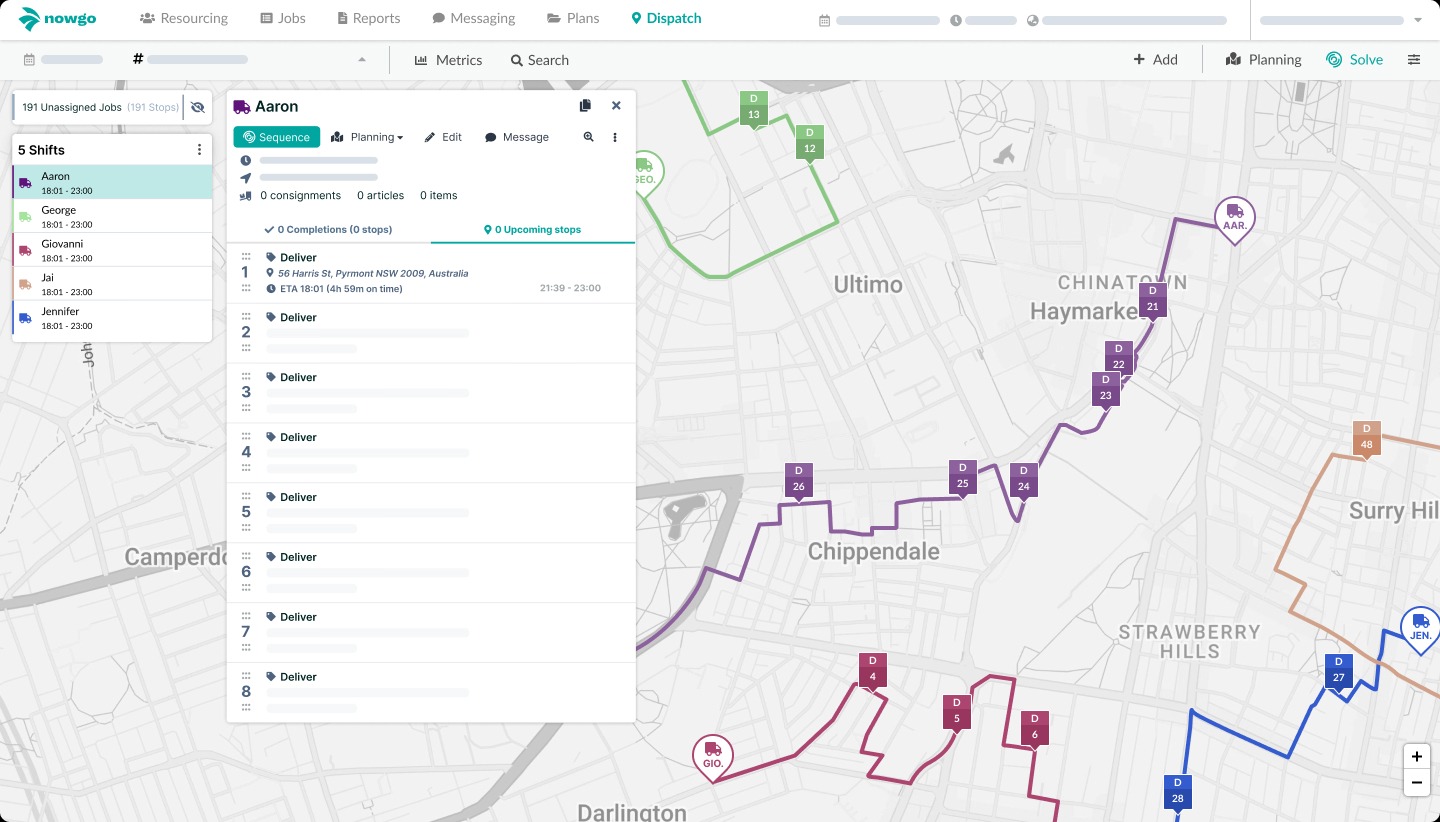
This means delivery operations can adapt quickly to unexpected changes such as traffic incidents, urgent orders, or customer requests without causing widespread disruption. Instead of spending time manually reorganising routes, dispatchers can focus on higher-value tasks such as customer communication and operational planning.
How much can route optimisation software improve fleet efficiency?
The efficiency gains from route optimisation software can be substantial, particularly for businesses managing high delivery volumes. While results vary depending on fleet size and operational complexity, many organisations report improvements such as:
- Reduced total driving distance
- Lower fuel consumption
- Fewer missed deliveries
- Reduced driver overtime
- Higher delivery density per route
These improvements translate directly into cost savings and improved service levels. By enabling more deliveries to be completed with the same fleet resources, route optimisation software also supports scalable growth. NowGo by Shippit combines route optimisation with real-time delivery orchestration, giving dispatchers full visibility and control over fleet operations.
NowGo automatically plans routes based on delivery windows, vehicle capacity, and driver hours, while letting dispatchers adjust routes dynamically throughout the day. Real-time updates, delivery reprioritisation, and capacity-aware planning help teams manage complex networks efficiently and maintain reliable delivery windows.

