Stay in the loop
Subscribe to receive the latest email news and updates from Shippit
The last mile has become the front line of competitive advantage. Whether it's construction materials arriving before dawn, fresh produce reaching restaurants for lunch service, pathology samples racing between labs, or bulky furniture squeezing through suburban streets, the ability to deliver reliably and efficiently increasingly determines business success or failure.
Yet across these diverse industries, a common challenge persists: traditional fleet management approaches are breaking under the weight of modern complexity.
The impact of fleet management on retail and B2B operators
Fleet management isn’t just about keeping vehicles moving, it’s about safeguarding the promises you make - whether the end recipient is a construction supervisor, lab technician, or a consumer. In sectors where timing, accuracy, and reliability directly shape revenue and reputation, fleet management is a critical differentiator.
Here are four industries that have the most to gain from optimised fleet management.
Construction
If tradies start at 8am, materials must arrive by 7am. Late deliveries create idle crews, eating into razor-thin margins in an industry where insolvencies continue to surge. Every hour of downtime cascades through project timelines and budgets, compounding as subsequent works are delayed and milestones missed.
Hospitality
For B2B food distributors, the stakes are equally high but compressed into even tighter windows. A restaurant expecting fresh seafood for lunch service can't absorb delays. Spoilage, customer complaints and lost contracts follow swiftly.
Pathology
Pathology logistics face perhaps the most unforgiving constraints. Time-sensitive samples moving between collection centres and labs operate on strict timelines where delays don't just impact productivity, they can affect patient outcomes and diagnostic accuracy.
Furniture retailers
Then there’s furniture retailers, who contend with a different complexity: bulky items, narrow delivery windows, multiple-person deliveries, and customers who've taken time off work to receive their purchase. Failed deliveries here don't just cost fuel, they erode trust, inhibit retention, and generate expensive redelivery attempts.
Across all of these sectors, logistics leaders are asking the same questions: are our dwell times under control, is our sequencing optimised, is our cost-per-drop sustainable, and are our drivers operating at peak productivity?
While they are four entirely different industries, they share a common thread. Traditional static schedules and limited visibility leave dispatchers scrambling, trucks idle, fuel wasted, and customer service teams fielding frustrated calls instead of dedicating time to value-adding tasks.
The cost of poor fleet management
For logistics decision-makers, the cost of poor fleet management is real. And it’s growing. Whether it’s razor-thin margins leading to surging insolvency rates in construction and hospitality businesses, or concerns about the impacts of supply chains on medicine shortage, fleet management is central to operational resilience.
When one vehicle is poorly managed, delays - and therefore costs - add up. When an entire fleet is poorly coordinated the damage can quickly spread out of control. Ultimately, weak fleet management doesn’t just slow operations, it directly erodes profitability, increases overheads, damages customer trust, and limits a company’s ability to scale.
Route optimisation versus delivery orchestration
Many businesses have invested in basic route optimisation tools, but these solutions fall short when facing real-world complexity. Static routing can't adapt when traffic accidents close motorways, when a pathology sample becomes urgent mid-route, when a construction site moves its delivery window, or when a restaurant suddenly needs an emergency top-up delivery.
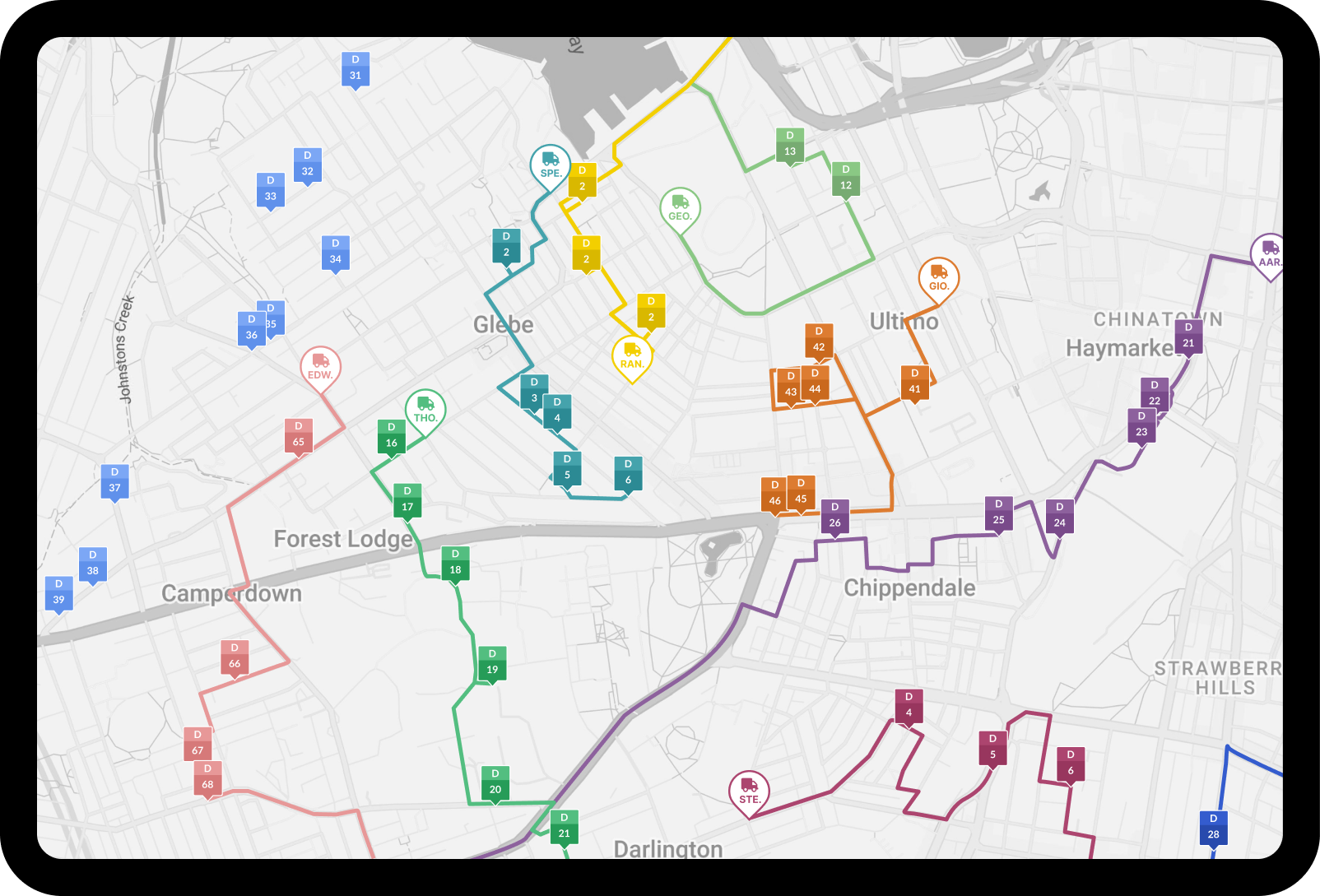
This is why logistics decision-makers are shifting from tools that simply ‘draw the route’ to systems that actively manage fleet performance in real time, protecting service levels and maximising fleet throughput.
- Route optimisation plans the “ideal day” while delivery orchestration manages the actual day. Route optimisation creates static routes based on known variables, while orchestration continuously adjusts those routes as new jobs, delays, or priority changes emerge.
- Route optimisation focuses on efficiency while delivery orchestration focuses on outcomes. Traditional tools minimise distance or time, but orchestration balances service levels, industry-specific constraints, customer expectations and operational realities to ensure the right deliveries happen at the right moments.
- Route optimisation is a set-and-forget calculation while delivery orchestration is a real-time decision engine. Orchestration ingests live data - from traffic and vehicle breakdowns, to urgent tasks and cancellations - and dynamically reallocates work across the fleet to maintain performance when conditions shift.
Using AI in fleet management
Advanced delivery management solutions like NowGo by Shippit are changing the equation for businesses running complex, time-sensitive operations - delivering impact far beyond the capabilities of traditional transport management systems. Built on an AI-first foundation, this technology processes massive volumes of routing data, priorities and constraints in real-time; from vehicle types and capacity to delivery windows and special handling requirements.
The results speak for themselves. Businesses using NowGo have improved fleet efficiency by 12% and fleet utilisation by 15%, while reducing fuel consumption, driver downtime and the number of kilometres delivery vehicles spend on roads. These aren't marginal gains, they're the difference between profit and loss in competitive markets.
Trade suppliers like Mitre 10 are already realising these benefits. Julian Yule, Digital IT Projects Delivery Manager at Mitre 10, notes that with NowGo powering their ‘Truck Tracker’ across 40,000 monthly deliveries, the business knows “exactly when materials will hit the site—no more downtime waiting around and fewer contacts to our busy store customer service teams."
Category-leading brands across sectors including Reece, Healius Pathology and News Corp are leveraging similar capabilities to transform their delivery operations.
The risk of not focusing on B2B fleet management in 2026
Failing to optimise B2B fleet management in the months and years ahead doesn’t just slow businesses down, it exposes them to a series of critical risks:
- Eroded customer trust as inaccurate ETAs and unreliable delivery windows fall below the standards set by Uber-level transparency.
- Increased operational friction from higher WISMOs, inefficient scheduling, and avoidable delays across labs, restaurants, construction sites and retail customers.
- Higher costs driven by redeliveries, idle staff, poor sequencing and avoidable inefficiencies across the supply chain.
- Reduced customer retention as businesses choose partners who provide predictable, dependable delivery experiences.
- Competitive disadvantage as delivery becomes a differentiator and competitors offer greater visibility, precision and reliability.
Next steps for strategic fleet operators
Recipients - whether a consumer or a site, restaurant or lab manager - expect precision and reliability as standard. With local commerce becoming denser and more complex, the increasing frequency of natural disasters, and fluctuations in demand and constantly changing traffic conditions, businesses need delivery operations that adapt in real-time and build resilience regardless of conditions.
The organisations that recognise fleet optimisation as a strategic lever rather than an operational afterthought are the ones building sustainable competitive advantages. Whether you're delivering building materials, fresh food, urgent samples, or bulky goods, the last mile is where customer trust is won or lost.
In an era of rising costs, driver shortages and escalating competitive pressures, effective delivery orchestration isn't just about doing more with less; it's about turning your fleet into a growth engine rather than a cost centre. Want to optimise your fleet? Book a demo with our fleet optimisation experts.