Stay in the loop
Subscribe to receive the latest email news and updates from Shippit
Shifting consumer expectations, intensifying global competition, economic uncertainty, and volatility in the ecosystem are rapidly reshaping delivery in Australia and New Zealand. With four in five Aussies saying delivery is important to them and two in three not returning to a brand after a poor delivery experience, it’s no longer a back-end function; it’s a primary driver of retention, acquisition, and profitability.
The stakes will only rise in 2026, with Amazon, Temu and Shein forecast to command 36% of local ecommerce. They’re rewriting the rules on price, range, and speed, forcing retailers to reassess customer experience and how they build, operate and scale their delivery networks.
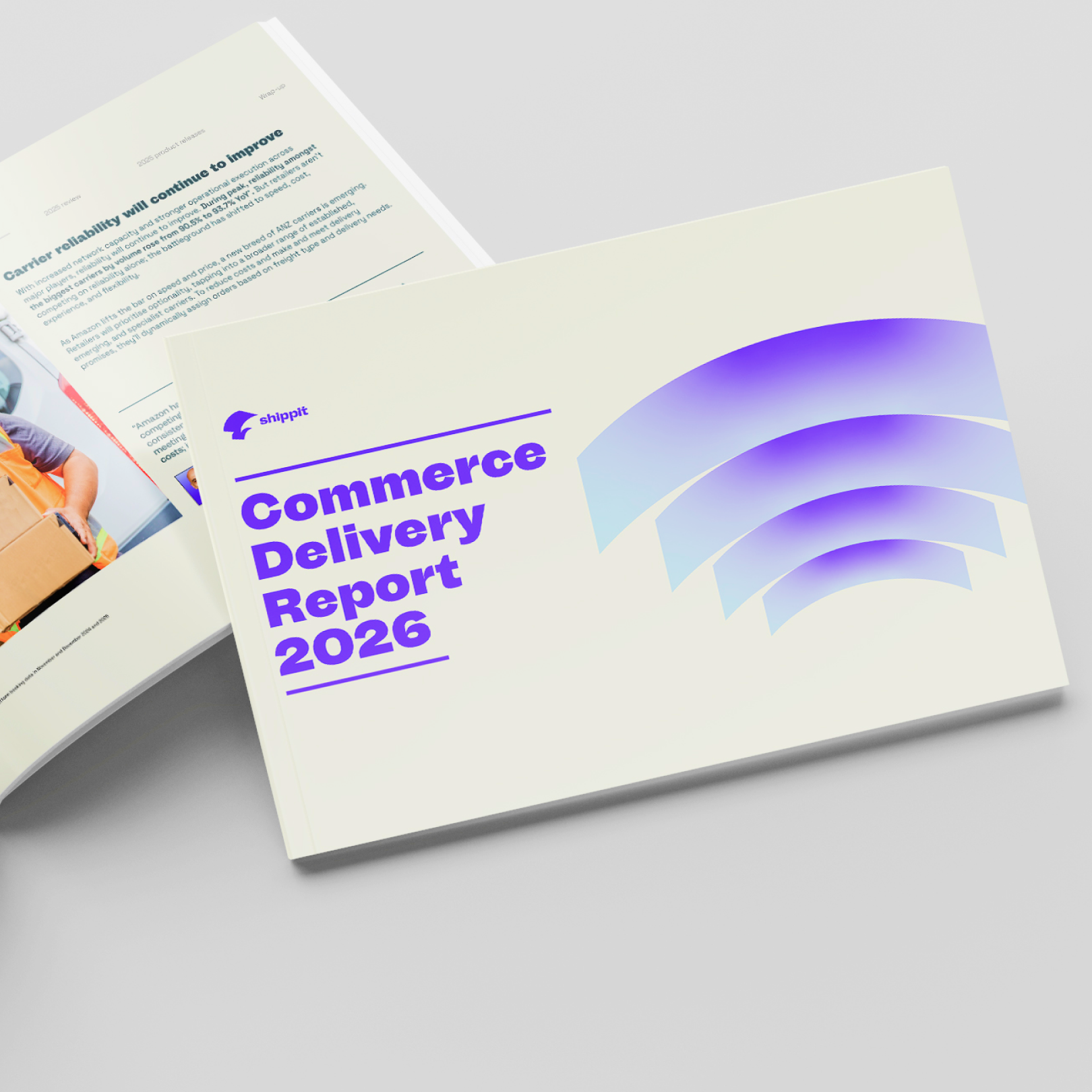
Informed by industry data and insights from ecommerce thought leaders, the Commerce Delivery Report explores the forces shaping delivery in 2026. From fast delivery and optimised fulfilment, to automation, AI and returns, the report offers a practical roadmap for retailers navigating the next phase of commerce delivery.
Here are a few of the trends it explores.
Consumers have a need for speed; retailers who improve fulfilment will win
Smart, fast delivery is no longer a secret weapon; it’s a prerequisite for growth. Retailers offering same- or next-day delivery generated 3.5–4% more orders during the 2025 Black Friday weekend. Expectations will only rise in 2026, with on-demand delivery linked to 3.5x higher spend per customer and 35% more orders.
But speed isn’t just won on the road; it’s won in fulfilment. A growing gap between what retailers promise and what they actually deliver is quietly undermining conversion and loyalty. In 2026, the retailers that rethink where and how fulfilment happens will turn speed into a growth engine — but how many are actually set up to do that?
AI won’t level the playing field; it will separate smart adopters from the pack
While 62% of retailers see AI as the biggest trend ahead, in 2026 it will act as a divider, not a leveller. AI is rapidly moving beyond pilots into day-to-day retail operations, from purchasing decisions to distribution. By 2026, some retailers’ systems will be learning and improving in real time, compounding gains others can’t match. The question is: what separates those pulling ahead from those left managing rising costs and complexity?
Inventory visibility will become existential
As delivery networks get faster, a more fundamental weakness is being exposed inside retail operations. Inventory visibility is rising to the top of the 2026 investment agenda — but not all fixes deliver the same results. Which capabilities actually unlock better conversion, predictability and cost control, and which leave retailers realising the impact too late?
Navigating 2026’s delivery landscape isn’t just identifying trends, it is about having the tools to act on them. We continue to invest in smarter delivery capabilities that help retailers simplify operations, protect margins, and deliver more consistent outcomes at scale - setting them up to compete more effectively in 2026 and beyond. The report highlights how our product releases are setting retailers up for success, whatever this year has in store.
The reality is, 2026 will be a fight for relevance and revenue. For retailers across ANZ, outside of brand and assortment strength, growth will only be possible with smart, fast, and reliable delivery. Fix fulfilment, replace guesswork with data, move inventory closer to customers, and build a culture of speed, smarts and reliability. Do this and 2026 can be predicated on success not just survival.
To read the full report, click here.