Stay in the loop
Subscribe to receive the latest email news and updates from Shippit
There’s a certain moment in every dispatcher’s day, right around 9:12 AM when the whole delivery schedule starts to wobble. One driver’s off sick. Another just called in from the wrong suburb. And a job that was "standard" five minutes ago is now flagged urgent because the customer "needs it before lunch."
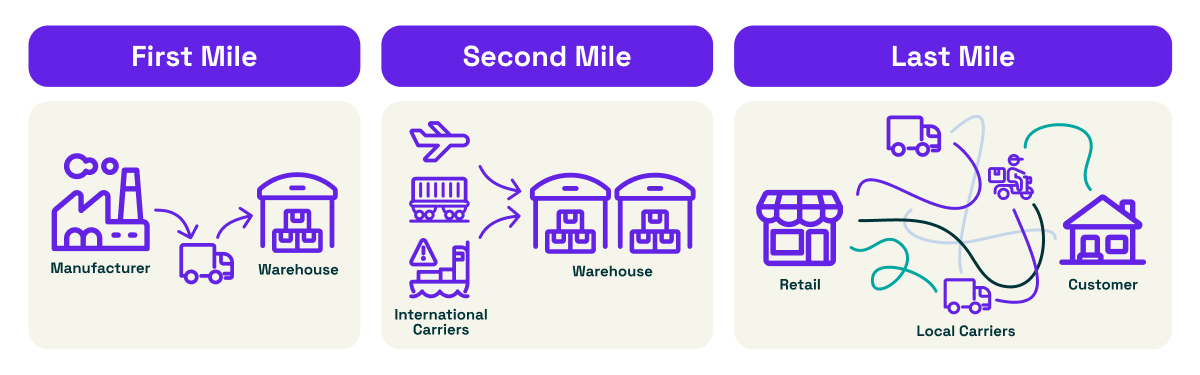
Most transportation management systems were built for the first mile and middle mile of the logistics chain. Not the complex last mile. They are masters of planning and make sense on spreadsheets. But out there in the wild west of the last mile with intense traffic, ad hoc jobs, five jobs competing for the same crane-lift truck, the plan rarely survives contact with reality.
Last-mile delivery makes up an estimated 41% of all logistics costs in the supply chain, according to the Capgemini Research Institute and is the biggest cost driver in the supply chain.
This guide takes you inside the needs and complexities of last mile delivery and walks you through what smart delivery teams are doing to turn those challenges into a competitive advantage. Not just with better tools but with better thinking.
What are Transport Management Systems (TMS)?
A Transportation Management System (TMS) is logistics software that helps businesses plan, execute, and optimise the physical movement of goods (both incoming and outgoing shipments).
Originally developed in the 1980s to help logistics-heavy industries like manufacturing and retail manage fleets and carriers, TMS has evolved into a central hub for supply chain operations.
When FedEx and UPS first scaled operations globally, their early routing systems were essentially the ancestors of modern TMS platforms — designed to handle millions of parcels while optimising cost and delivery times.
In Australia's logistics landscape, TMS technology has become essential infrastructure. The Australian transport sector contributed $164.4 billion to the economy in 2020-21, representing 7.9% of GDP, according to the Australian Bureau of Statistics. With over 1.2 million Australians employed in logistics-related roles and the industry growing at 2.5% annually, efficient transport management isn't optional, it's survival.
While TMS traditionally played an important role in coordinating everything from route planning and carrier selection to real-time tracking and freight billing in the first and middle mile, there are many reasons why it’s falling short when it comes to the complexities of last-mile logistics.
Let’s dive into why.
Core TMS functions that matter in Australia
Modern transport management systems handle the complex requirements of first and middle mile Australian logistics:
→ Route Optimisation: Critical for Australia's long-haul distances and regional deliveries. Advanced algorithms factor in road conditions, driver hours, and fuel efficiency to minimise the tyranny of distance.
→ Real-Time Tracking: Essential visibility across Australia's diverse delivery zones—from metro Sydney to remote Queensland stations. GPS tracking, SMS notifications, and proof-of-delivery capture keep customers informed.
→ Compliance Management: Navigate complex Australian regulations including Chain of Responsibility laws, dangerous goods requirements, and state-specific transport regulations automatically.
→ Analytics and Reporting: Data-driven insights into delivery performance, cost per kilometre, carrier efficiency, and customer satisfaction metrics tailored for Australian market conditions.
For the Australian market: Logistics costs are expected to reach US$217.30 billion by 2029, with the sector contributing approximately 8.6% to Australia's GDP. Companies that don't optimise their transport management risk being left behind in this competitive, high-stakes environment.
The problem with traditional TMS for last mile delivery
“Many supply chains are perfectly suited to the needs that the business had 20 years ago.”
— Jonathan Byrnes, MIT & Supply‐Chain Author
He’s not wrong.
Most transportation management systems were built for the first mile and middle mile and think in lanes and pallets. They were built for delivery windows that span days, not hours, when planning happens once in the morning and sticks. The last mile is very different. While many principles from the first and middle mile still apply, when it comes to complexity the last mile is a different beast. Same-day, multi-stop, driver-specific and real-world chaos is exponential in the last mile. And the cost of staying static is enormous.
The global last-mile delivery market was worth $175.3 billion in 2023 and it’s growing fast. That means more orders, tighter deadlines, and way less room for rigidity. Yet many TMS platforms still freeze your routes at 6AM and force dispatchers to wrestle spreadsheets when a fridge delivery drops in at noon.
Try rerouting when a driver calls in sick in Perth. Or inserting a critical medical delivery at 11:17 AM in regional NSW. Or figuring out which vehicle can handle a bulky, two-man furniture lift up three flights of stairs in an inner-city Melbourne apartment block.
The system wasn’t built for that. So people bypass it.
They jump into group chats. Scribble notes on whiteboards. Rely on memory and gut feel. Because the tools they’re given can’t keep up with the job they’re asked to do.
And that’s not just inconvenient but expensive. When dispatchers are flying blind and drivers are reacting instead of executing, the margin bleeds begin.
Most TMS teams aren’t agile enough for the last mile
In last mile delivery it’s never one big thing. It’s a multitude of small leaks that add up and turn perfectly calm days into complete chaos.
⇒ The Sydney delivery that went out late because no one noticed the driver rerouted for roadworks on the M4.
⇒ The extra headcount you added in Melbourne because manual dispatch was too slow to keep up with CBD delivery windows.
⇒ The refunds, the WISMO calls, the trucks running empty on return legs.
Every missed connection chips away at your margin.
McKinsey estimates that 13-19% of logistics costs come from breakdowns in communication during these transitions. In Australia's high-cost logistics environment, these inefficiencies are amplified by distance, labour costs, and fuel expenses.
And when you don't have real-time insights or the smarts to optimise based on your business priorities, you're always behind. You're managing by feel, not outcomes. Which driver has capacity for that urgent run to your most important client? Which vehicle can deliver and offload those 1000 kg concrete pylons to Parramatta this afternoon? Which way can you optimise your routes to maximise revenue from the goods that you deliver? You won't know until it starts costing you.
Because once you can see the gaps clearly, that's where margin comes back.
What modern last mile fleet dispatch actually looks like in Australia
Fleets and deliveries run on updates. The most important thing to know about modern dispatch is that not about the day you planned but the day you’re actually in.
And today changes fast.
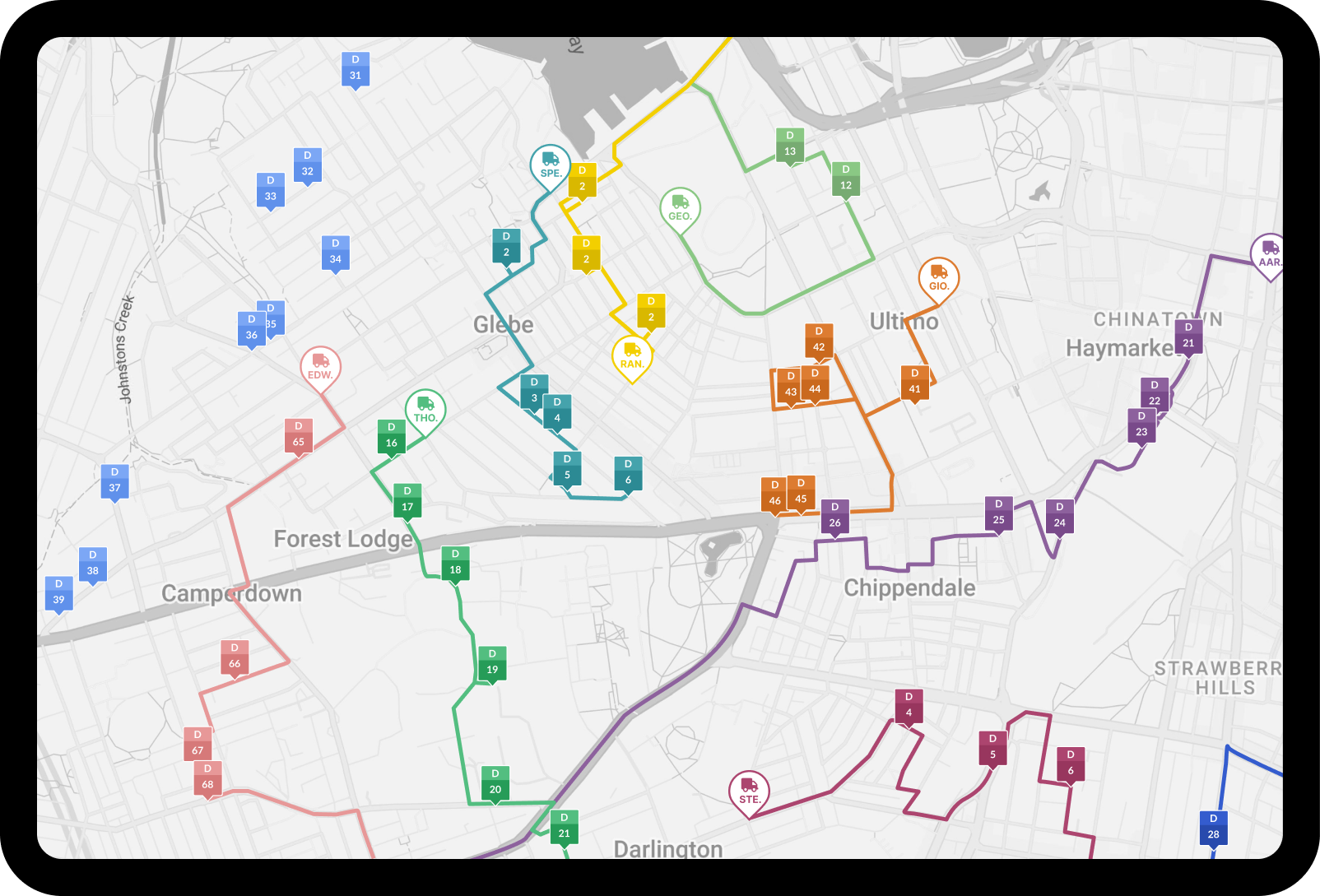
A bushfire closes the Pacific Highway. A water pipe burst on Pitt Street in Sydney CBD. Melbourne's metro delivery windows shift because of a major event. Cyclone warnings affect North Queensland logistics. This is what modern fleet management systems like Shippit NowGo are built for: handling minute-by-minute fleet coordination that adapts to Australian conditions, working either alongside or in place of your TMS.
In a real-world study coordinating ambulances in Madrid, dynamic fleet management improved average response time by 15.8%, reducing wait times from 11:45 to 9:54 minutes. Australian logistics operations need similar agility.
Modern teams need:
→ Live ETAs that update as the day moves
→ Dynamic reallocation when things shift
→ Scenario planning that actually reflects resource constraints
→ Driver-led decisions that matches job type, truck size, or skill
→ Outcome-driven routing for handling time-critical, bulky, or high-priority deliveries
The challenge isn't just managing freight—it's executing efficient fleet operations in real-world conditions. Whether you're replacing outdated TMS technology or enhancing existing systems, specialised fleet solutions bridge the gap between transportation planning and actual delivery execution.
What leading fleets are doing differently
Top-performing delivery teams are running high-speed, multi-channel operations where timing, coordination, and customer experience all matter and they’re using dispatch as a competitive advantage.
That means:
→ Optimising their own fleet operations with intelligent driver and vehicle assignment that reduces dead kilometres and maximises productivity across service zones.
→ Dynamic fleet allocation where real-time conditions drive routing decisions, moving beyond static planning to responsive execution.
→ Planning around real Australian constraints: Driver skills for dangerous goods, vehicle capacity for bulky items, traffic conditions, and local delivery restrictions—all factored into routing decisions automatically.
→ Centralised fleet visibility: Real-time vehicle locations, driver status, and delivery progress providing complete operational control and customer communication capability.
And here’s the part no one talks about: They build systems that don’t burn people out.
They know smooth operations mean fewer dropped comms, faster updates, and systems that don’t collapse the moment the plan changes.
Because driver turnover isn’t a staffing issue but a system design issue. Even with wages up 12.3% in 2022, large truckload carriers still lose nearly 90% of their drivers every year. And the reason isn’t pay.
It’s chasing deliveries with broken apps, missing critical updates and being left out of the loop.
Leading Australian fleets fix that by building workflows that hold under pressure, for everyone.
Modern delivery management software vs TMS for fleets
The gap between planning and execution is where most Australian fleets lose money and time. Legacy logistics systems weren't built for the real-time complexity of managing your own vehicles and drivers under changing conditions.
The smartest Australian operators are upgrading their fleet operations with modern solutions like Shippit NowGo.
Whether you're replacing outdated transportation systems entirely or enhancing existing logistics infrastructure, it's about optimising the most critical component: your fleet execution capability.
NowGo provides complete fleet management with:
- AI-powered route optimisation designed for Australian distances and conditions
- Real-time driver management and intelligent vehicle allocation
- Dynamic dispatch that adapts to traffic, weather, and operational constraints
- Comprehensive fleet performance analytics and operational visibility
Companies using NowGo consistently achieve:
- Fulfilment times under 3 hours for metro deliveries through optimised routing
- 10-20% reduction in fleet operating costs via intelligent vehicle and driver allocation
- 15% improvement in fleet utilisation with dynamic route optimisation
- Complete operational visibility enabling proactive decision-making and customer communication
Whether you're managing deliveries across Sydney metro’s congested roads, coordinating long-haul runs between capital cities, or ensuring critical supplies reach regional communities, modern fleet management isn't just an upgrade, it's essential for competing effectively in today's logistics landscape.