Stay in the loop
Subscribe to receive the latest email news and updates from Shippit
From 1 August 2026, a major amendment to the Heavy Vehicle National Law (HVNL) takes effect in Australia. Not only are many industry commentators calling it the broadest structural overhaul since HVNL began in 2014, there is no grace period.
For fleet operators running trucks over 4.5 tonnes, there is a new onus to demonstrate that their system is safe. The liability is broad, impacting not only the company itself, but dispatchers, and even those who load the trucks.
This is where fleet management software comes in. Platforms like NowGo don’t only improve efficiency and profitability, they can help you capture the records that support good practice and demonstrate your compliance efforts.
But what are the new HVNL changes? Who is impacted? And how can fleet operators get ahead?
What is the new HVNL legislation?
HVNL is the regulation related to trucks over 4.5 tonnes. It applies nationally, with the exception of Western Australia and the Northern Territory. The threshold works on the theoretical maximum weight of the fully loaded truck, not what the truck happens to carry on a given day.
A truck at exactly 4.5 tonnes stays outside HVNL, but if a trailer is attached to it - pushing the combined weight above the threshold - it falls within the regulation. The HVNL will affect fleets relying on vehicles like pantechs, compactors, tautliners, tilt tray trucks, crane trucks, rigid trucks, or low loaders. It will be particularly influential in the trades, where operators use large vehicles to transport large, heavy materials.
In 2026, new amendments make the regulation stricter. On 1 August, safety obligations will become more explicit, fines will become steeper, and various core duties become more important.
The new regulations will be particularly far-reaching, as it affects roles that never used to feel like safety roles. Everyone who shapes the job - from dispatchers and planners, to managers and those responsible for loading and unloading a vehicle - carries the duty. Drivers only fall within the regulation if they perform another task, such as loading or unloading a vehicle.
A scheduling decision made at a desk or a loading decision made at a dock now carries legal weight. It is a prosecution risk, with named individuals liable.
What are the penalties?
Three rules carry the real penalties (and almost everything else ladders up to one of them):
- The Primary Duty (Chain of Responsibility)
- Executive due diligence
- Unfit to drive
Under the Chain of Responsibility, everyone who can affect how a job runs shares the legal duty to keep it safe so far as is ‘reasonably practicable’. Effectively, this means what could sensibly be done about a risk at the time, weighing things like how likely the harm is, how serious it could be, what the person knew or should have known, and the cost and suitability of the available ways to reduce it.
Take a Safety Management System (SMS), for example. It’s a documented playbook that outlines how you manage safety risks. From August, it becomes a requirement for accredited operators. And it matters for those that aren’t accredited, too.
A Primary Duty breach can be proven by showing you failed to have proper safety systems in place, with no incident required. In other words, you can be exposed just for not being able to demonstrate that you took reasonable steps. An SMS helps you demonstrate you did.
The penalties under Chain of Responsibility scale, depending on the severity of the incident:

These penalties aren’t theoretical. In 2022, a transport company in New South Wales was fined $180,000 while two of its schedulers were fined $15,000 each, for bad scheduling, not allowing for fatigue, not checking work and rest hours, and not using GPS to verify driver hours. That was under existing regulations; under the changes from August 1, penalties will increase.
Under executive due diligence, directors and senior managers are personally responsible for ensuring the company complies.
And under the unfit to drive rule, a driver must not drive while fatigued, ill, injured, medicated, or exposed to stress. The new HNVL regulations will see the maximum fine more than triple, from $6,000 to $20,000. A company cannot pressure a driver to keep going, and has to ensure they’re fit to work before starting.
Additionally, from August an audit can be used as evidence in court. That means accurate, proactive records could support a defence or reduce a penalty. Bad or non-existent records, meanwhile, leave you exposed.
That is why compliance and digital record-keeping are fast becoming buying criteria, not a back-office afterthought. The evidence a fleet can produce, routes, checks, GPS, proof of delivery, is suddenly worth a great deal.
What role does fleet management software play?
If you’re using a fleet management software that captures what happened on the road, you’re better-prepared for August’s changes than those building their compliance on memory and paperwork.
NowGo by Shippit can support operators in four key ways related to the new duties:
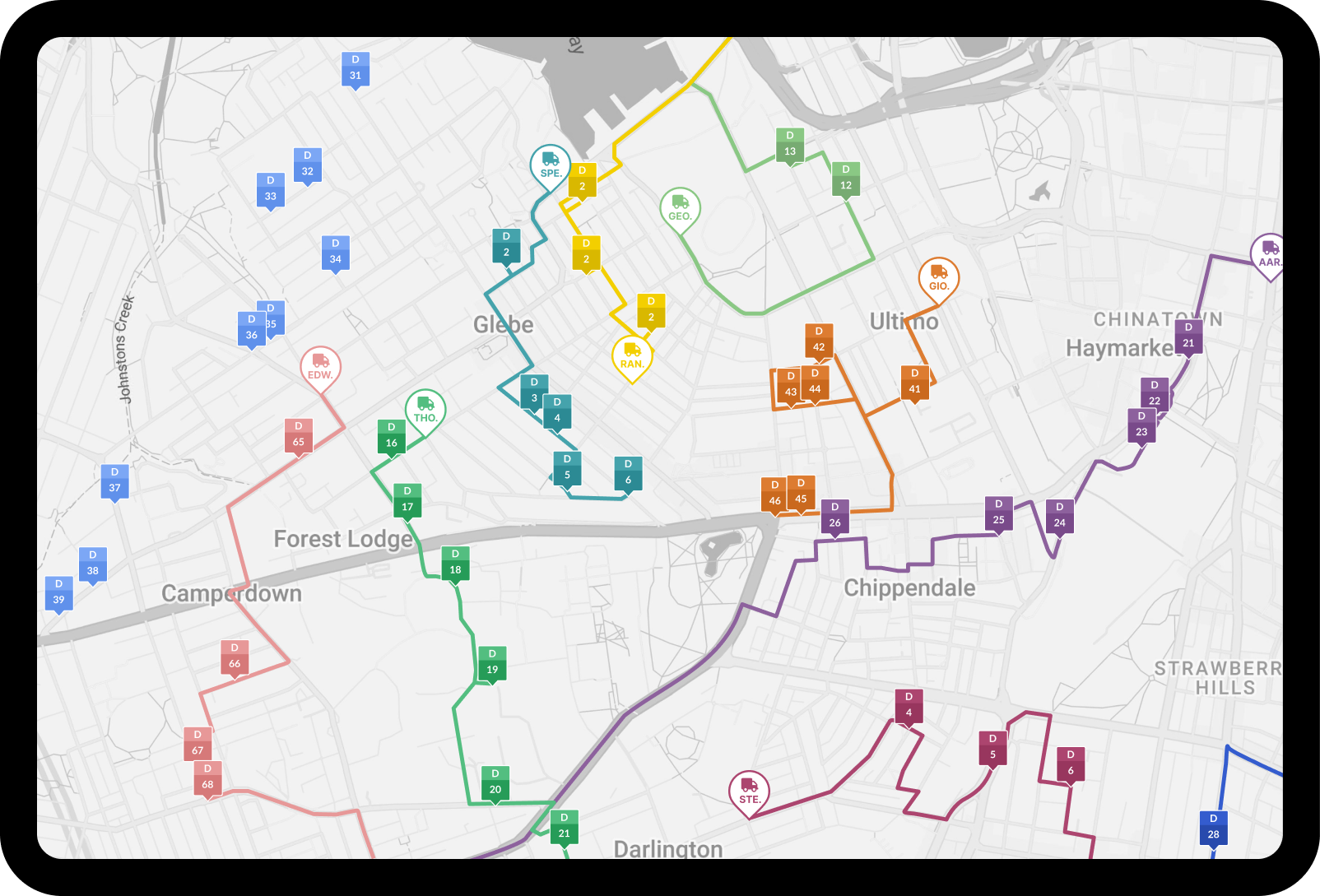
- Realistic, shift-aware planning. The NowGo solver builds runs that respect breaks, so the operator is not making decisions and pressuring drivers into breaking work and rest limits. A breaks report gives you a record of whether that plan was followed. This may assist operators in keeping records relevant to their Primary Duty requirements.
- Proof drivers were fit before they left. Start-of-shift compliance checks, captured and reported, help you record that checks took place before a driver started. This could help fleets with both the unfit to drive and Primary Duty rules.
- Live visibility during the day. Live tracking on dispatch lets dispatchers monitor progress as it happens, rather than finding out about a problem after the fact. That is the difference between managing a run and reacting to it. This is important for the Primary Duty rule.
- An automatic evidence trail. Completions, outcome codes, proof of delivery (POD), and feedback are all recorded as the job unfolds. From August, that kind of record may form part of the evidence an audit can draw on. Most tools report on compliance after the work is carried out, stitching a picture together at the end of the week. NowGo by Shippit generates the data in the flow of work, as drivers complete jobs, so the evidence exists as soon as it’s required. For a fleet facing stricter regulations with no grace period, that is the gap between confidence and exposure.
But it’s not just compliance that NowGo by Shippit was designed for.
Away from the regulations, it lifts fleet utilisation by around 15%, cuts fuel and labour costs, enables fleets to complete more deliveries per shift, and boosts NPS with more reliable performance and better visibility.
The takeaway
Running a fleet keeps getting harder. Customer expectations are rising, margins are tighter than ever, and now new regulations are increasing fleets’ exposure to fines. As new regulations approach, it’s critical to review your safety protocols, understand your requirements, and what you need to do to ensure compliance.
Fleet management software like NowGo by Shippit help to better position operators to address the new requirements and manage their exposure to penalties, whilst also improving their fleet’s performance and profit.
Want to understand the role NowGo could play for your fleet? Book a demo.
Note: This article is general information, not legal advice. The Heavy Vehicle National Law and associated penalties are subject to change, and their application depends on your specific circumstances. Shippit makes no representation that use of NowGo or any software will ensure compliance with the HVNL or any other law — compliance obligations remain the responsibility of each operator and chain of responsibility party. You should obtain independent legal advice about your obligations.